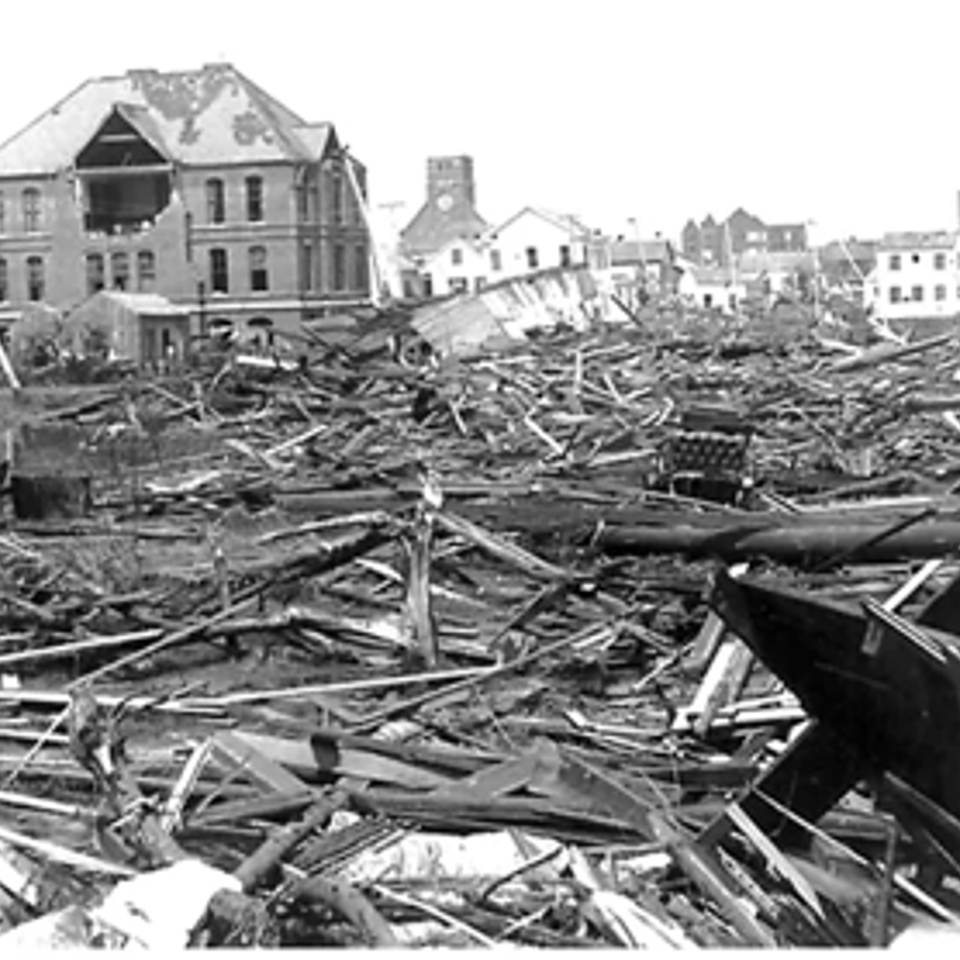
Since an inadequate number of able-bodied volunteers were available, some survivors were forced to perform the gruesome tasks of clearing debris and disposing of the thousands of bodies found throughout the city. Some of the funeral pyres used to cremate those remains were reportedly located on the grounds of Edwin’s elegant 33rd Street residence.
Hurricane destruction in Galveston, Texas in September 1900.
In 1900, the city elections in Galveston once again brought a new mayor into office. The mayor-elect instituted radical changes in the city’s government structure, which led to Edwin’s retirement as Chief of Police that September. His tenure with the Police Department was brief, but certainly eventful!
Edwin’s final act as Chief of Police was to prepare a report on the performance of the Galveston police force during the hurricane and its immediate aftermath. He gave his men high praise and noted that while they were on duty keeping order and making rescues, eight of them lost wives to the storm - along with a combined casualty count of twenty-two of their children.
"Upon motion, the resignation was accepted and Chief Ketchum was tendered a vote of thanks for his past services. The mayor also said a few nice things about Chief Ketchum.” [Page 1 headline, Galveston Tribune, Sep 25, 1900]
In 1901, Edwin served another term as Commander of Hancock Post No. 2, G.A.R. The membership of the Post remained strong at 65. Their monthly meetings were conducted at a hall located at 307 Tremont Street in Galveston.
In July 1903, an unfortunate incident occurred at Edwin’s work camp at Sour Lake, Texas. It seems his company had been contracted by the BSL&W Railway company [Beaumont, Sour Lake and Western] to participate in the construction of a new rail line connecting Sour Lake to Beaumont. An unruly mob reportedly entered the camp, firing weapons in the air, with the intent of frightening and driving off Edwin’s work crew - which were all men of color. Edwin, with shotgun in hand, stepped forward in defense of his crew and warned the gun-wielding leader of the mob to lay down his weapon.... twice. When the order was twice ignored, Edwin fired the shotgun one time, badly wounding three of the instigators. It was later reported that...
“The men working under Mr. Ketchum were not molested, owing to the prompt use he made of his shotgun, and these men are still at work.” [Picayune Newspaper, New Orleans, Louisiana, July 11, 1903]
On July 20, 1904, Edwin was 61 years old and still living at 1605 33rd Street in Galveston when he filled out an application for a military pension. He declared that, since the war, he had lived “in and all over Texas from Rio Grande to Red River with headquarters always in Galveston.” and was currently working as a General Contractor.
His pension claim was based on disabilities he incurred during his service with the 176th New York Infantry – including: the gunshot wound to his arm; a right inguinal hernia; and piles [hemorrhoids]. Edwin stated that he had been “treated for piles since 1880 when they became very annoying, many times being incapacitated by them.” His application was approved - but not until nine months later – and was approved only for the gunshot injury.
Edwin was unable provide evidence to support his claim that the hernia and piles were actually caused by wartime manual labor while serving as Chief of Pioneers. In March 1905, after receiving a request from the Pension Department for an affidavit from a wartime witness to his unfortunate ailments, his cheeky response was:
“I cannot procure affidavit of commissioned officer, of noncommissioned officer, or enlisted man of my Company or Regiment concerning origin of disability as mentioned.... for at the time I discovered my condition I did not care to have anyone share my knowledge thereof – a young man of 22 or 23 does not care to have the world know that he is any less a man than others of his class and age. Young men hide their infirmities to appear young. Old men tell of theirs to prove age & experience.... Respectfully submitted, Cpt. Ketchum, 1605 33rd St., Galveston, Tx.”
At any rate, Edwin began receiving a $15 per month pension [about $575 in 2026 dollars] “by reason of wound received in line of duty.”
In April 1910, when the federal census enumerator visited the Ketchum household, Edwin was 67 years old and still working as a ‘railroad’ contractor. He and Mary had been married 36 years, and they owned their home free and clear. Three of their daughters were still living at home - ‘Elennor’ (Isabelle), ‘Mamie’ (Mary), and Alice. ‘Elennor’ was soon to be wed.
Her special day came on November 1, 1911. Edwin and Mary, along with the two younger girls, ‘Mamie’ and Alice, attended the elegant affair. Twenty-six year-old Isabelle was married at Grace Episcopal church in Galveston. A lengthy description of the wedding was published in the Austin-American Statesman newspaper a few days later.
On June 1, 1912, Edwin was 69 years old and still living at 1605 33rd Street. About two weeks earlier, President William Howard Taft signed the Sherwood Act into law, which raised the ceiling on pension payment amounts. This prompted Edwin to file for an increase in his monthly allowance. His application was favorably received and he was awarded a $4 increase, to $19 per month [about $645 in 2026 dollars].
By 1913, Edwin’s long career as a contractor seems to have come to an end. But income was still needed to pay for living expenses and upkeep of their large home. The 1913 Galveston city directory indicates he, now in his 70s, had taken up employment with the U.S. Government as an assistant Examiner and Recorder at the U.S. Appraiser’s office in Galveston. To supplement this government salary, Edwin also petitioned for another increase in his pension allowance. In an April 1913 letter addressed to the Commissioner of Pensions, he appealed:
By reason of which and infirmities arising from chronic diarrhea (now causing severe piles) that placed me in hospital at La Fourche, La under Regimental Surgeon Willitts in April or May 1863, I am now unfitted for manual labor. I therefore ask that these conditions be considered in my behalf and that I be paid the maximum pension under this act [Act of May 11, 1912] to wit: $30.00 per month to which I am entitled.
Edwin did receive an increase, but not as much as he had hoped. His allowance was increased from $19 to $25 per month [about $835 in 2026 dollars]. In a follow-up letter [dated February 5, 1914], Edwin displayed tenaciousness with another letter to the Commissioner of Pensions in Washington, DC, protesting:
Sir, On or about April 14th 1913, I wrote in protest against the rating given me for pension under the Act of May 11th, 1912. I claiming by reason of wound and other infirmities, with my age, under this law I was entitled to (30) Thirty and 00/100 dollars per month. Whereas I am being paid but (25) twenty five & 00/100 dollars.
I served from April 1862 to April 1866, four years at hard work most of the time as a ‘Pioneer’ or in Command of Pioneers – was in hospital but once then for chronic diarrhea, from effects of which I sometimes now suffer, was a prisoner of war for a period, and was wounded at Cedar Creek, Va in October 1864. Hence I claim, under the last clause, 1st section of Act cited above $30.00 pension per month.....Very Respectfully, Edwin N. Ketchum.
Two weeks later, the Commissioner responded with a denial letter [dated February 18, 1914]:
In response to your letter of the 5th instant [sic], you are informed that to give pensionable status under the disability clause of the act of May 11, 1912, the disability or disabilities rendering manual labor impossible must be established as due to service in line of duty.
You were formerly pensioned under the general law for gunshot wound of right arm, the only disability established as of service origin, at the rate of $15 per month – ¾ total of rank – and the part of claim based on hernis [sic] and piles, was rejected on the ground of no record and your failure to establish the same as having been incurred in service and line of duty.
For several years, Edwin continued to supplement his pension income by working as an examiner at the U.S. Customs House in Galveston. Finally, in February 1918, his monthly pension stipend rose from $25 to $30. However, inflation during the intervening war years effectively eroded the actual buying power of the higher rate. So he continued to work for the U.S. government. In January 1920, the federal census enumerator found Edwin working as a government clerk at age 76. He and Mary were still living in their 33rd street residence.
By 1924, the Hancock G.A.R. Post was conducting its monthly meetings at Edwin’s home. The declining membership of the Post had remained steady at 15 since 1919. Edwin was serving as Post Adjutant that year, and would have been responsible for maintaining the records of the Post. By 1926, due primarily to age-related mortality, membership of the Post dropped dramatically - to just 4 survivors.
After member Elijah Verbeck passed away on January 3, 1929, and then six days later George H. Clawson died, only two veterans of Hancock Post #2 were left - Edwin Ketchum and William McDonald. Since a minimum of three members were required to remain viable, the long-lived Hancock Post #2 of Galveston Post was forced to disband. Edwin, as Post Commander, duly surrendered the Charter.
Later that year, in September, Edwin became the last survivor of the Post after William McDonald was killed in an auto accident. Knowing that his life was also likely nearing its end, Edwin took another thoughtful action to honor the memory of the Post members who preceded him in death. He wrote:
I have deposited with the First National Bank the sum of $150 in trust, the interest of which is to be used in keeping in repair the curbings and grounds of two plots of ground in Lakeview Cemetery, property of Hancock Post No. 2, Grand Army of the Republic, in which said post’s dead are buried. As I shall be leaving these parts in the near future, I am desirous of bequeathing the duty of the care of these grounds to Argonne Post [Argonne Post No. 20, American Legion of Galveston] that my comrades shall not be disturbed, nor the care of the grounds neglected. If your post will accept this charge, your letter of acceptance endorsed by myself will be filed with the bank. This will authorize the commander of your post, to call for funds from said bank that may be needed for repairs. This charge is to be handed by your organization to the one succeeding yours, as yours is succeeding mine.”
In April 1930, Edwin was 87 years old and still living at 1605 33rd street with Mary and their 28-year-old unmarried daughter, Alice. The large dwelling was valued at $20,000 [about $389,000 in 2026 dollars]. The census enumerator also noted that the Ketchum’s owned a radio set, Edwin was a veteran of the Civil War, and had been born ‘at sea’ as an American citizen. However, the infirmities of old age were rapidly catching up with him.
But even at his advanced age, Edwin was apparently still mentally sharp and continued to work for the government. The 1930 Galveston City Directory lists Edwin as employed as an Examiner of Merchandise on the U.S. Customs barge. But his days were numbered.
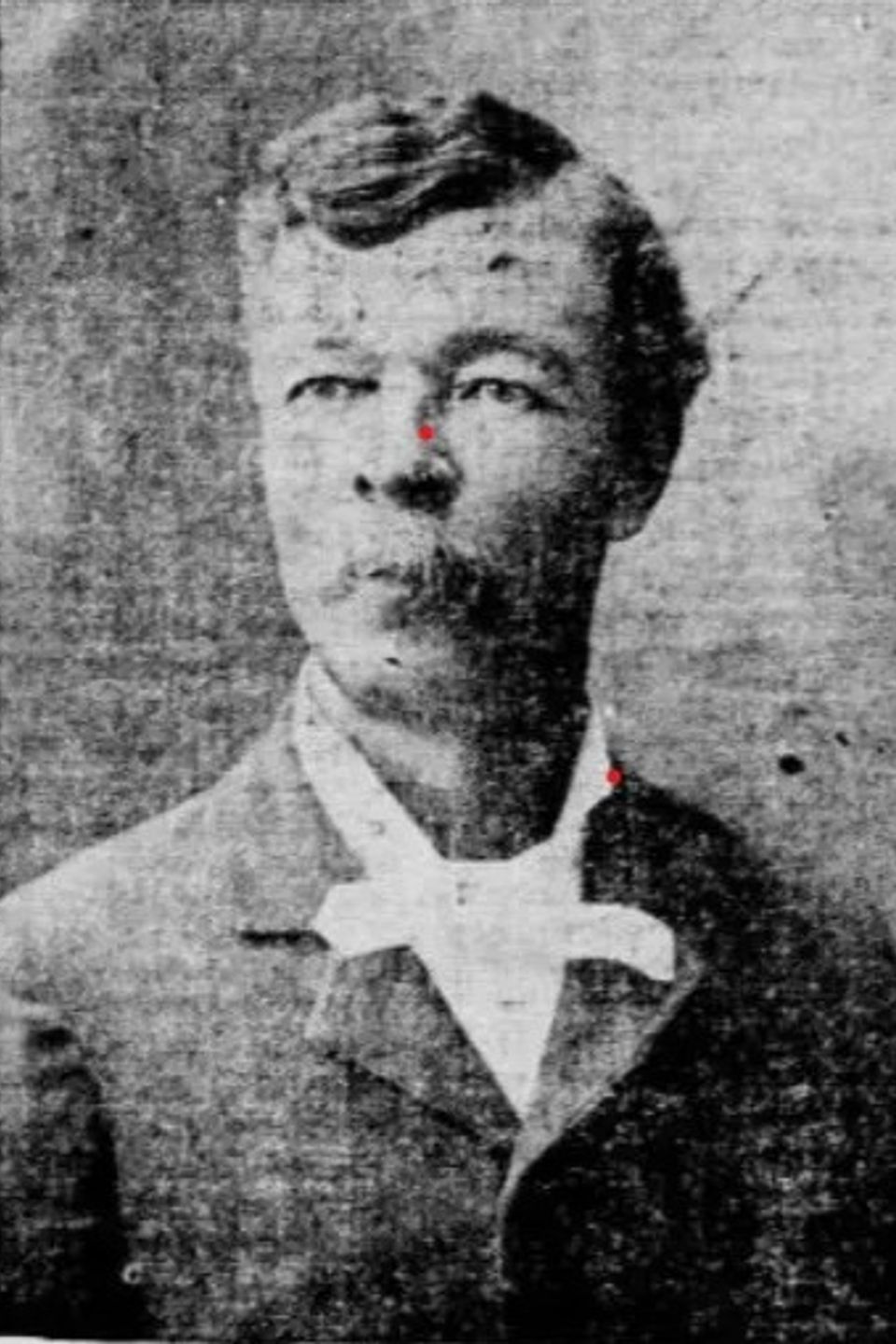
Finally, at 6:45 a.m. on February 19, 1931, Edwin Nesbitt Ketchum passed away at John Sealy Hospital in Galveston. He was one week shy of his 88th birthday. Kidney failure, inflammation of the bladder, and a salivary gland infection all contributed to his death. He was cremated in San Antonio, and on February 20, his ashes were scattered on the waters of Galveston Bay.
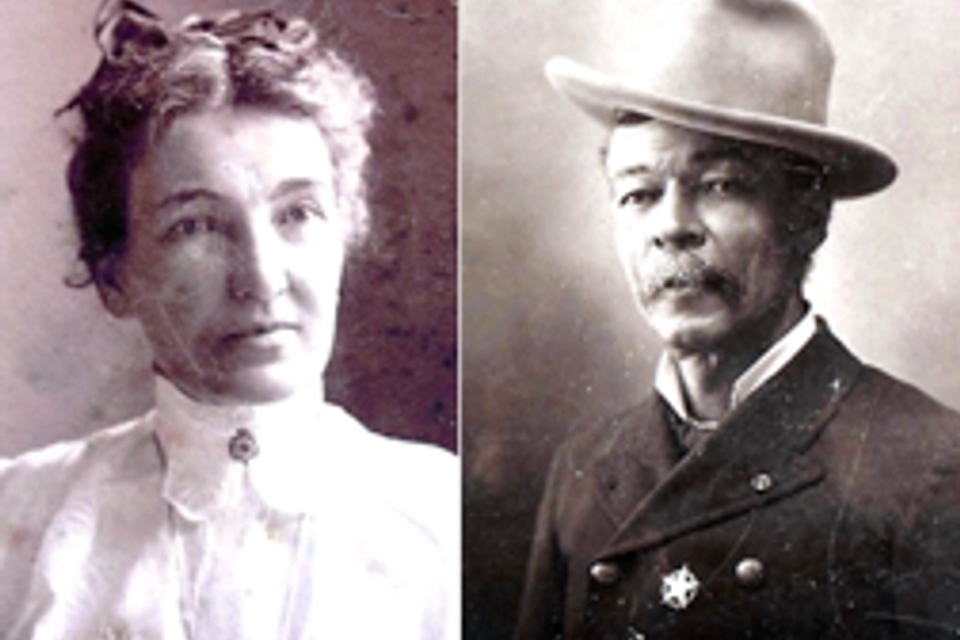
Under the Pension Act of 1930, his widow, Mary E. Ketchum, filed for a widow’s pension the following month. Between 1918 and the time of his death in 1931, Edwin’s pension allowance had increased from $30 to $75 per month. Since he was too ill to endorse his final pension check, Mary returned it to the Commissioner of Pensions with her pension claim application. Her claim was approved in September 1931, and she began receiving a monthly pension of $40.
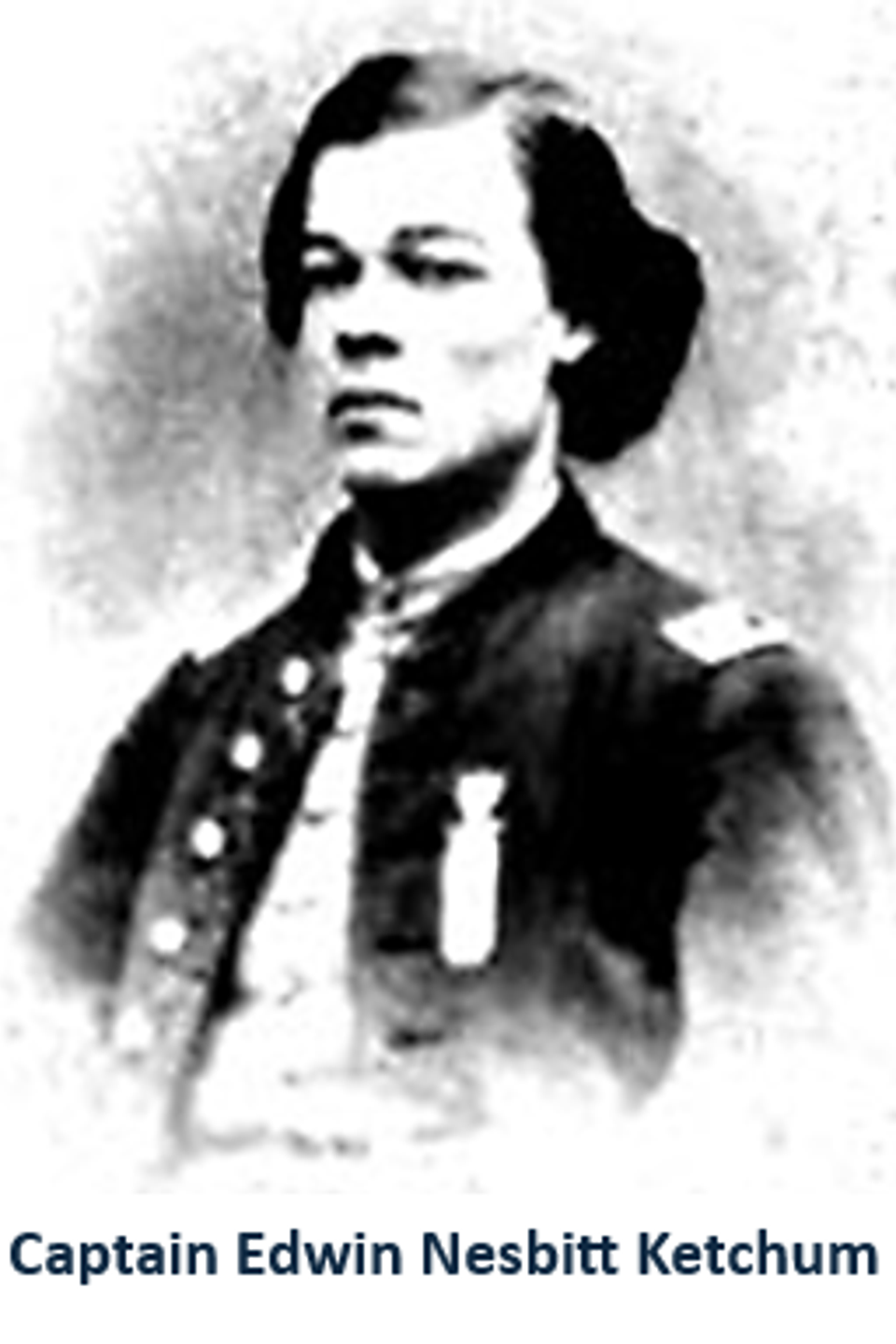
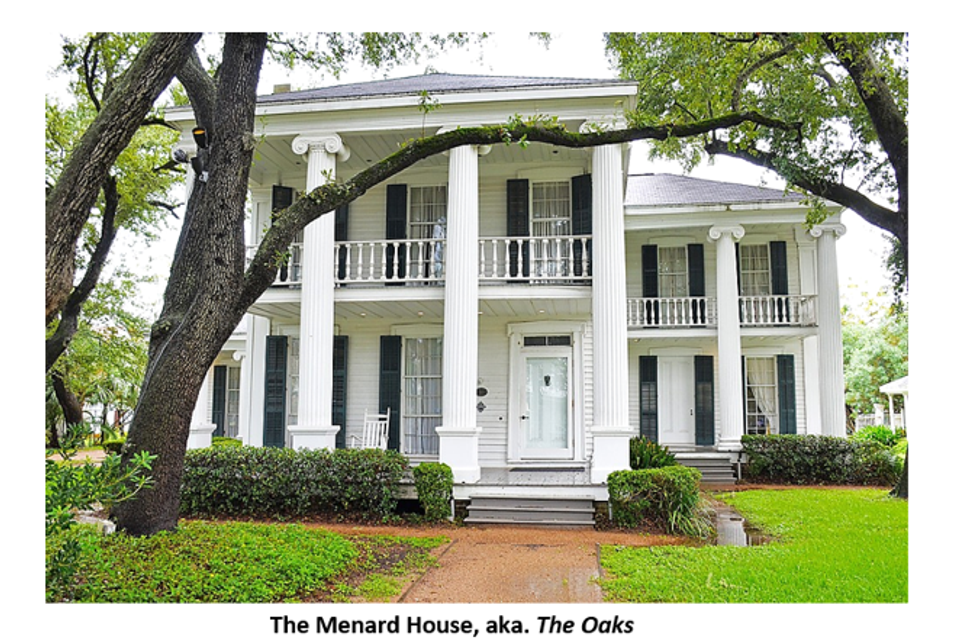
Captain Edwin N. Ketchum’s life was colorful and action-packed – soldier, Indian scout, cattle herder, Chief of Police, businessman, U.S. Customs Examiner, Grand Army of the Republic officer, survivor of the 1900 Galveston Hurricane – and owner of the oldest surviving residence in Galveston. He was remembered by his grandchildren as a warm and loving man who enraptured them with endless exciting stories of his lifetime of adventures.
Friend and Texas author, William W. Sterling remembered Edwin as a "remarkable man" who "had an erect, military bearing, wore cowboy boots, was a crack shot, and would fight a circular saw.....He exerted a weighty influence over me, and all that I learned from him was good."
Born at Sea and Now at Rest at Sea!
R.I.P. Captain Ketchum!
Department of Texas and Louisiana
Sons of Union Veterans of the Civil War
March 2026