Skip to content


William Kelly

William Kelly was born April 2, 1840 in Downpatrick, a historic town in County Down, Northern Ireland. His parents were John Kelly and Rose McBride, both natives of Ireland. “A graduate of Trinity College in Dublin, he and a classmate on a visit to the United States were at Niagara Falls when Civil War was declared. The two friends returned to the city of New York, good horsemen that they were, and enlisted in the 71st Mounted Rifles.”...(daughter Geraldine Kelly, 1893).

Records indicate William actually mustered as a Private with Company M, 1st Mounted Rifles on September 16, 1862. Less than a month later, on October 1, 1862, he was promoted to Corporal. He served for three years and moved up in rank to 1st Lieutenant. Because of his reported background in maritime transport and logistics. William was transferred to the Quartermaster Department, and assigned as a Brigade Quartermaster. His assignments took him down the Mississippi and Gulf Coast waterways as federal forces established control over key southern ports.

In early November 1863, Union forces launched a campaign in southern Texas at Brownsville. Their objective was to disrupt the Confederate cotton smuggling trade across the Rio Grande. William arrived in South Texas during the Union occupation of Brownsville. While there, he seems to have recognized the commercial possibilities presented by the Rio Grande, the Gulf Coast, and Brownsville's strategic position along the international border. He was eventually breveted as Captain to lead Company B, 8th Infantry Regiment of United States Colored Toops.

William was honorably discharged February 2, 1865, and settled in Brownsville. He went to work for King, Kenedy & Company (Richard King, future Texas icon and owner of the 825,000-acre
King Ranch) , who operated a fleet of steamboats on the Rio Grande. Eventually, William obtained steamboats of his own, carrying freight from Brazos Santiago to Brownsville and towns further inland.

On May 10, 1870, he and widow Mary Anne Gallagher-Thornham obtained a marriage license in Cameron County, Texas. She was born in 1842 at Fort Jesup, Sabine Parish, Louisiana. Mary’s first husband, Captain Jesse Thornham, Sr. was lost at sea during the 1867 hurricane in the Gulf of Mexico. William and Mary were united in matrimony four days later, on May 14, 1870. She brought her two young Thornham sons into the marriage with William: Jesse Simeon Thornham and Alfred Thornham. Eventually, she and William became the parents of five children of their own.


Within weeks of their marriage, the 1870 federal census enumerator visited the Kelly homestead in Brownsville. He noted that William was 30 years old and was employed as an agent for a steamboat line. Mary was 28 years old and her boys were ages four and two. William owned real estate valued at $500, and personal property worth $4,000 (approximately $102,000 in 2026 dollars). For a man who had only recently begun building his life in Brownsville, it was an impressive beginning.
 
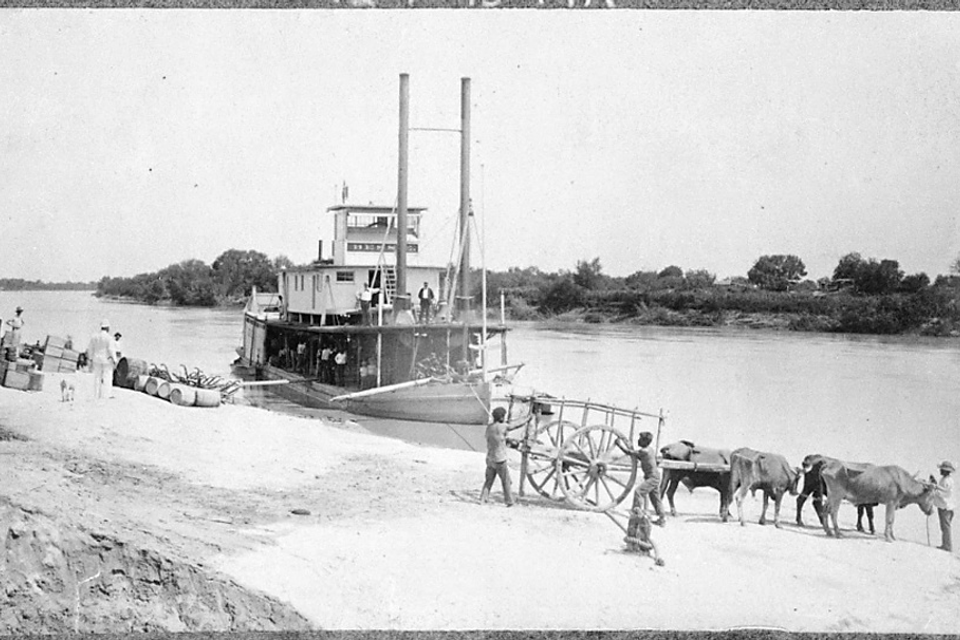
Stern wheel bessie, loading at fort ringgold en route to brownsville

On February 19, 1871, their first child, Nora Kelly, was born in Brownsville. And on June 23, 1873, their second child, William Kelly, Jr., was born, also in Brownsville. William’s family was flourishing. But eventually, the booming steamboat hauling business dwindled to a trickle as railroad companies began to spring up. By 1874, William’s fleet of sixteen steamboats had shrunk to one small boat, ‘Bessie’, which made only two trips per month (water levels permitting) from Brownsville to Rio Grande City.              
                                               
The stern-wheel steamboat "Bessie," l
oading
at Fort Ringgold en route to Brownsville.


Being industrious and resourceful, William turned his attention to other enterprises, including becoming director of the Rio Grande Railroad and vice-president of the First National Bank. He worked diligently in promoting the city of Brownsville as well as championing railroad construction to the frontiers of Texas and Mexico. He had the vision of connecting Brownsville to a wider area in order to expand trade and commerce. The following year, on October 15, 1875, their third child, Mary Geraldine Kelly, was born in Brownsville.


On August 23, 1878, baby Anna Rose Kelly was welcomed into the family. Like her older siblings, she was also born in Brownsville. Then a year later, in October 1879, William and Mary’s fifth and last child, John Washington Kelly, was born in Brownsville.

When the 1880 federal census was taken in June 1880, William had by then expanded his career to selling life insurance. He was 39 years old and Mary was 38. They were living on Washington Street in Brownsville. The Kelly household included William’s teenage stepsons, Jesse and Alfred Thornham, and all five of his younger children: ‘Norah’, William, Geraldine, Annie, and John Kelly.

In 1887, William served as the chairman of the local board of school trustees. In that role, after recognizing a desperate need for structured public education, he spearheaded a massive reorganization of the city's schools. Under his leadership, the historic Brownsville Public School (later known as the old Grammar School) was erected in 1889 to house the city's primary and high school students.

In June 1890, forty-two Union veterans were living in Cameron County, according to the Special Veterans Schedule of the 1890 federal census. William Kelly was listed among them. However, his entry includes only his name and Post Office address: Brownsville. It is interesting that the usual information - rank, service unit, and length of service, were not noted.

On June 10, 1893, eleven of those Union veterans living in the Brownsville area organized Gen. Albert M. Barney Post #67 of the Grand Army of the Republic. William Kelly was one of the eleven Charter Members and was elected by his peers as the first Post Commander. In fact, surviving records of the Department of Texas, G.A.R. show that William served multiple 1-year terms as Post Commander between 1893 and 1908. He was apparently the driving force within the Post.

William proved to be civic-minded by continuously working to promote and improve his community. For twelve years, he served as chairman of the public School Board. During his tenure, many improvements in accommodations and methods were made in the Brownsville school system. He became highly esteemed for his business integrity and social skills, becoming quite prominent and influential in Brownsville.

He was one of the founders of the First National Bank of Brownsville, and is vice president and director of the concern. He is also a leading spirit in educational matters, and the splendid public school building which Brownsville boasts was erected chiefly through his influence and activity. Most undoubted evidence of Mr. Kelly’s enterprise and desire for the development of this section has been furnished by the zeal and vigor with which he has entered into the present railroad move, giving most liberally of his own means toward it, and devoting his time to the cause unsparingly. Mr. Kelly is looked up to as one of the most highly educated and thoroughly progressive gentlemen of Brownsville, and he will prove one of the most potent factors in assuring the future prosperity and development of this section....(The Brownsville Herald, Dec 27, 1893).
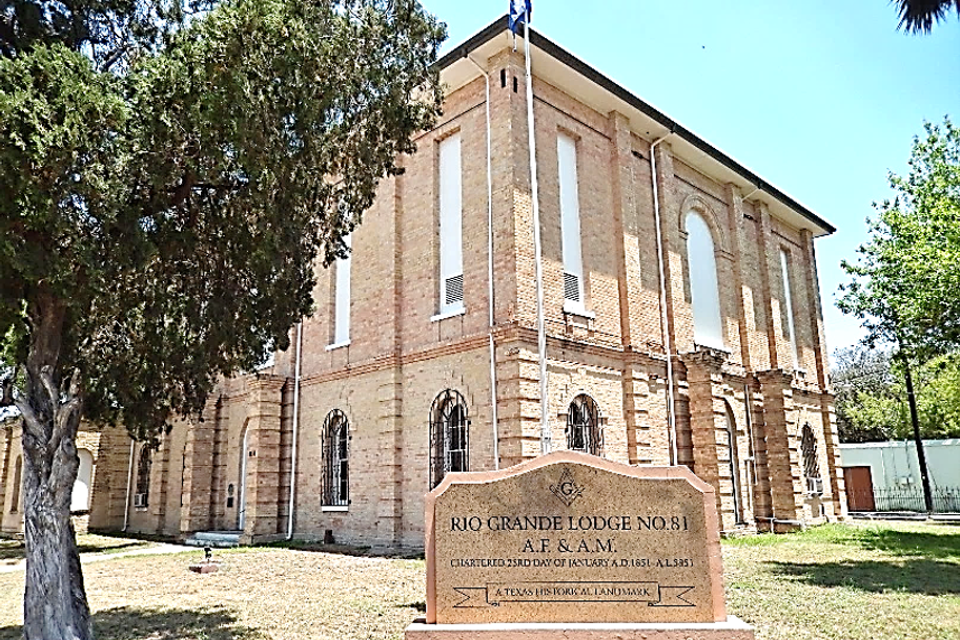
 
Rio grande lodge no. 81 in 2018
Other articles published in The Brownsville Herald in late 1893 mentioned William was as one of the Directors of the Rio Grande Railroad and as chairman of the Camerson county railroad committee. In addition, he regularly hosted newsworthy social events at his home. The Brownsville Herald newspaper routinely followed and reported on his activities, as well as the events surrounding the lives of his wife and children.

William’s varied interests also included roles outside of business and family. He was a Freemason. In June 1897, he served as “district deputy grand master [who] conducted the installation ceremonies” of the newly elected officers of Rio Grande Lodge, No. 81, A. F. and A. of Brownsville.
                                                   
                  
Historic Rio Grande Lodge No. 81 in 2018

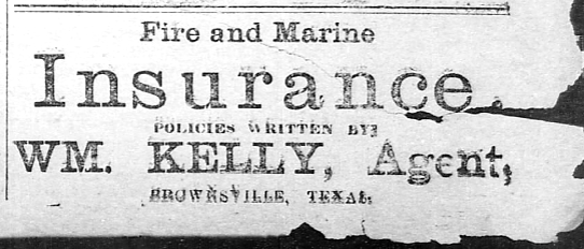
During the late 1890’s, William regularly advertised his insurance business in The Brownsville Herald. In addition, he was engaged as Secretary for the Chatfield Irrigation Company. Founded in 1893, this company introduced the irrigation systems that paved the way for the agricultural boom in the Lower Rio Grande Valley.

Over the years, William assembled an extensive personal collection of books and other literature. Around the turn of the century, he made portions of this collection available to the public through a reading room operated from his business office. This provided local residents with an early opportunity to access books and reading materials in a community where no established public library yet existed. His example of making literature accessible to the public later inspired civic efforts to establish Brownsville’s formal public library.
 
Business advertisement in the brownsville herald

Business advertisement in The Brownsville Herald

The 1900 census records William as a 60-year-old ‘banker’ living in Brownsville with his 58-year-old wife, Mary, and their four unmarried adult children: Louisia A., 29, Mary G., 24, Annie R., 22, and John W. Kelly, age 20. His married step-son, Jesse S. Thornham and family were living next door. The enumerator noted that William had been married 30 years, had immigrated to the U.S. in 1861, later naturalized, and owned his house free and clear.


William continued to be a strong promoter of the Rio Grande country. On a trip to Washington, DC, he spoke with a reporter from the Washington Post , once again promoting the Rio Grande country The reporter described William as: “Mr. William Kelly, a banker of Brownsville, Tex., is at the Hotel Barton. Mr. Kelly is a gentleman of wealth and much influence on the border, where he settled after the close of the Civil war. He is heavily interested in silver mines in Mexico, and on the Texas side has large plantations and cattle ranches.”

During the interview with the reporter, William exclaimed: My town of Brownsville is for its importance perhaps the most isolated place in the United States, as we are 160 miles from the nearest railroad station. The country about it, on both sides of the Rio Grande, is in the semi-arid district, and often the lack of rainfall brings distress on our people. But the future of the region looks bright, and everybody is in good spirits. The outlook is that our entire valley, including many hundred thousand acres of land, will at no distant day be one of the great rice-producing belts of the Union. This year, as my agent informs me, we are going to produce twenty-two to twenty-four bags of rice to the acre, which is far in excess of the yield of that crop in Louisiana and Eastern Texas. There is nothing to do but to take the water from the river and put it on the land; irrigation is the magic word that is going to make this part of our State blossom like the rose.

Socially, the Kelly’s hosted the local Euchre Club meetings and games in the parlor of their home. Mary was a member of the Club, and daughters Geraldine and Annie regularly competed in the card games. However, sometimes, business was mixed with pleasure:

Captain William Kelly, president of the First National Bank of Brownsville, Tex., has been enjoying a few days’ sojourn in Galveston visiting friends. He is returning from a trip to New York and stopped over to see and study more of this city and port. As the guest of Mr. M. B. Kingsbury, general agent for the Southern Pacific at Galveston, Mr. Kelly was taken on a trip on the bay on board the Juno. A view of the shipping and the harbor and a visit to the Southern Pacific docks were included in the itinerary. At the Southern Pacific docks, the party, which included a number of prominent Galvestonians, boarded the Morgan liners and were given a most welcoming reception by the officers. Mr. Kelly is delighted with Galveston and her people and will return to Brownsville thankful for having lingered in this city long enough to learn something of the business of this port...(Galveston news, Nov. 9, 1902).

As a leading figure in the town, William was sometimes drawn into unsavory entanglements. One such entanglement occurred in 1906, known as the
Brownsville Affair. During the night of August 13, unidentified shooters reportedly fired over 100 rounds into Brownsville homes and businesses, killing a bartender and wounding a police officer. The local residents immediately blamed the Black soldiers of the 25th U.S. Infantry stationed at nearby Fort Brown. The shootings were mischaracterized as an armed uprising, causing terror among the residents.

 
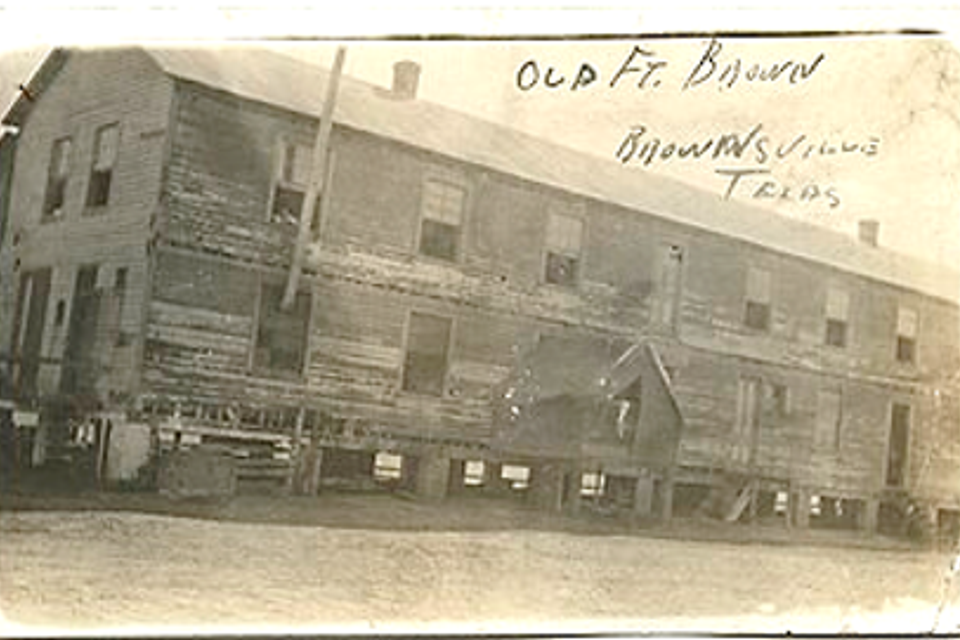
Fort brown barracks of the 25th u.s. infantry
As chairman of the local Citizens’ Committee, William was compelled to write the following appeal to authorities in Austin:

The excitement among our people is not subsiding. The fears of our women and children cannot be allayed by argument. They feel unsafe while the negro troops are in our midst. We cannot stand the tension arising from their fears, and the constant watchfulness it makes necessary. We implore you to act at once for our relief, and to answer this immediately.... By order of The Citizens’ Committee, William Kelly, Chairman.                      

Fort Brown barracks of the 25th U.S. Infantry


This affair must have been especially galling for William, for he had formerly led Black troops as an officer during the Civil War. One can only wonder about his state of mind after he heard accounts indicating that the soldiers were sleeping in their barracks at the time of the attack, and that spent rifle shells had been planted to frame them. At any rate, the investigators believed the townspeople. When the infantrymen maintained their innocence, and refused to name nonexistent culprits among their ranks, President Theodore Roosevelt accused them of a "conspiracy of silence." He ordered 167 Black soldiers - including decorated veterans - dishonorably discharged without a trial, stripping them of pensions and military careers. Decades later, historical investigations definitively proved the innocence of the Black troopers. In 1972, the U.S. Army and Congress officially reversed the Roosevelt order, posthumously granting honorable discharges and clearing their names.

On a happier note, an opportunity for celebration occurred in May 1907. William and Mary planned an elegant affair at their home for May 14. The occasion was to be the wedding of their daughter, Anna Rose Kelly. This particular date was carefully chosen to coincide with the anniversary of the elder Kelly’s marriage. However, the groom, Lt. Mack Richardson, was ill at Fort Sam Houston at the time and could not travel to Brownsville to attend. Although Anna’s wedding had to be postponed, the posh celebration went ahead anyway and was dedicated instead to the anniversary of William and Mary’s 1870 wedding.

During the following month, on the morning of June 14, The Brownsville Affair came back to haunt William and his family. On that day, his step-son, Jesse Thornham, was exiting William’s office just as a Samuel Wreford was passing by. At close range, Jesse fired two rounds of buckshot, wounding Wreford in the arm and abdomen. Wreford died within minutes - after identifying Jesse as the shooter. Jesse immediately turned himself in and admitted his crime. The reason for the shooting might possibly be explained by the following account: “It appears that when Mr. Kelly was testifying before the senate committee at Washington, in regard to the negro soldier raid, he referred to Samuel Wreford. The latter took exception to Mr. Kelly’s remarks and yesterday circulated a paper around Brownsville in which he spoke in bitter terms of Mr. Kelly.” It appears to have been a tragic revenge shooting.

Also, in 1907, Barney Post #67, G.A.R. of Brownsville disbanded due to declining membership as the old veterans passed away. As mentioned, William was the first, and now also the last, commander of the venerable G.A.R. Post. However, he continued to honor and remember his deceased comrades each year on Decoration Day.

1908 was also a stressful year for William and Mary Kelly. In February, they received word by cablegram that their 28-year-old son, John Washington Kelly, had died in La Paz, Bolivia in South America. There was no knowledge “to his being ill, and the news was a terrible surprise.” John had traveled to Bolivia “to accept a position as manager of the Bolivian Supply company, which is connected with the work of constructing the railroad now being built by the Bolivian government. Having found that the high altitude at La Paz affected his health, [he] last summer resigned the position to take a position on the coast of Bolivia. About a month ago, he wrote home that his former position at La Paz had been offered him again, and that he would return there to accept the place. That was the last letter received from him, and he was at that time in his usual health.” No further details about John’s death are available.

As late as 1908, William was still engaged in maritime shipping. In April, at nearly age 70, he “brought a cargo of 50,000 feet of lumber and 75,000 shingles to Tarpon Beach [Florida] from Orange, Texas” on his schooner George Locke. The Brownsville Herald noted the voyage and mentioned William as “one of the best known sea captains on this coast, and none know the ins and outs of this part of the Gulf coast better than he.”
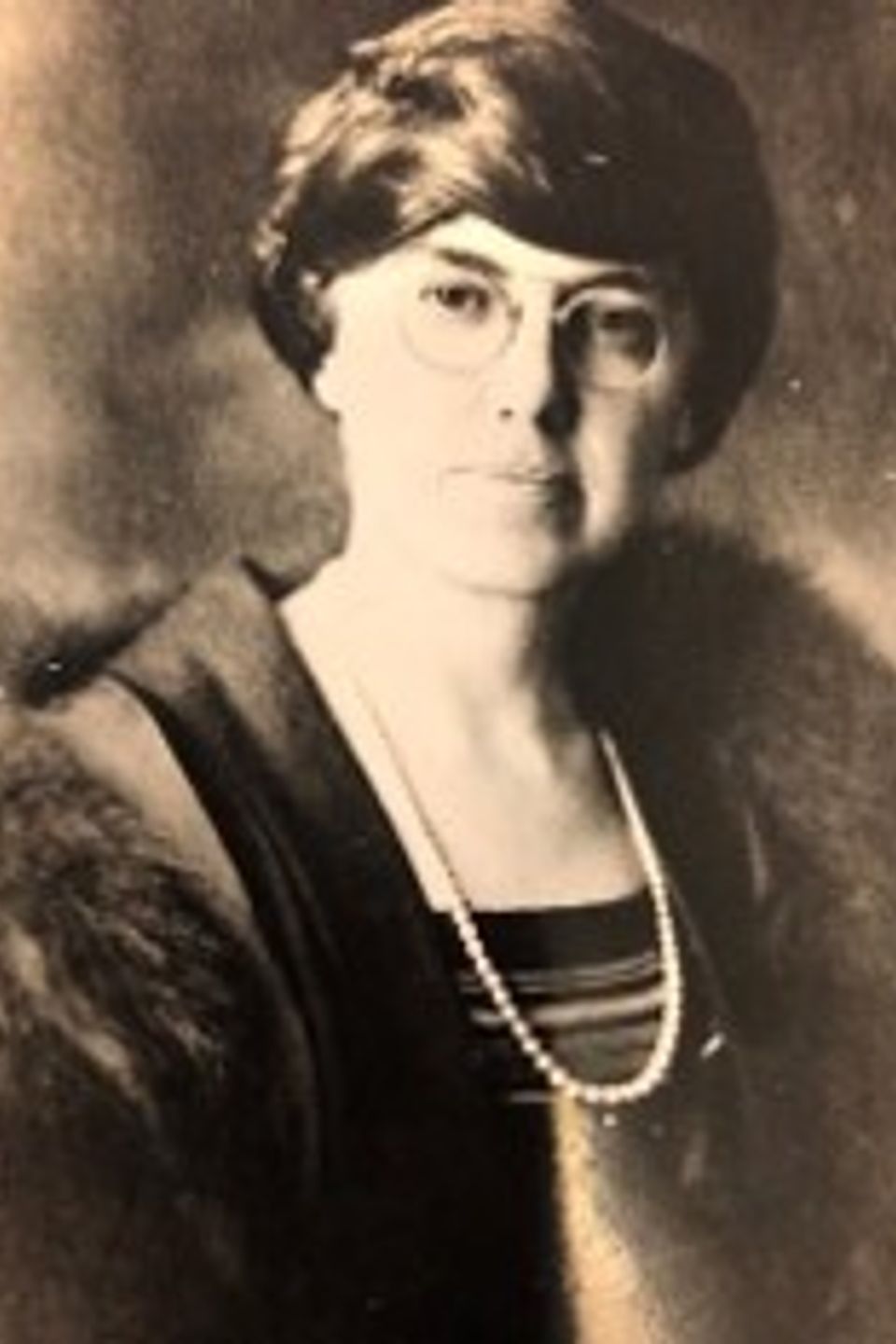
Nora kelly (1871 1964), daughter of captain william kelly

Plans to begin construction of a sewage system in Brownsville began in earnest in June 1909. Naturally William, as a mover and shaker of the city, was instrumental in moving the project forward. “... the meeting of the sewer committee held at the Commercial Club room Saturday afternoon, in response to the call of Capt. Wm. Kelly, chairman of the general sewerage committee.”

In April 1910, Capt. William Kelly was a 70-year-old insurance agent living at 808 Washington St. in Brownsville with his wife Mary, now 68, and their three unmarried daughters: Nora, age 37, Geraldine, age 35, and Anna Kelly, age 33. None of the daughters were employed. William and Mary are noted as having been married 40 years. William’s stepson, Jesse Thornham and family, which included his wife and three Thornham children, was also living in the household. The presence of Jesse indicates that his recent killing of Samuel Wreford did not involve an extended prison sentence, if any at all.

Left: Nora Kelly (1871-1964), daughter of Captain William Kelly

With all the aforementioned roles, appointments, and positions held by William Kelly through the years, it would seem that his plate would be full. But not quite. His influence extended even further. In January 1912 “The Brownsville Hotel Association was organized and the first definite steps taken towards securing a fine tourist hotel to cost $200,000.00 or more, at the meeting of businessmen held yesterday afternoon at 4 o’clock. The meeting had been called by Wm. Kelly and Juan G. Fernandez, representing a committee of citizens which was informally organized recently.” Apparently, William continued to advocate for improvements and advancement of his community well into his sunset years.

The health of William’s wife, Mary, had been declining for several years. In early 1914, she traveled to San Antionio for a “serious operation” and remained for several months to recover. At first, her condition worsened, but from April through June, while recuperating at the Santa Rosa Infirmary and then St. Joseph’s Sanitarium, she seemed to rally. She finally returned home to Brownsville in late August, but her days were numbered. She passed away at home at 8 p.m. on November 12, 1914 at age 72. Her funeral was held at her residence after “services at the Church of the Sacred Heart”, and she was then laid to rest “in the city cemetery.”

In 1917, William observed Decoration Day on May 30 in the City Cemetery at the gravesite of his late G.A.R. comrade, Emmitt H. Goodrich. William was one of the three surviving members of his old disbanded G.A.R. Post. He had summoned the other two surviving former-members, Mr. Sedgwick and F. A. Sandborn, and they both responded to the call. “A firing party and an escort” were obtained from Fort Brown, which enabled “full military honors, the volley and the sounding of Taps, to be accorded the dead. The veterans and their friends” met “at the office of Captain Kelly on Levee street at 4:30 o’clock”, and proceeded “to the grave of Comrade E. H. Godrich [sic], the last member of the camp [Post] to pass away.” During the program, William read President Lincoln’s Gettysburg Address and six graves were decorated.

On Decoration Day in May 1919, William again spearheaded a formal memorial ceremony at the City Cemetery. Fort Brown again supplied a firing party, which along with members of the Sons of the G.A.R., escorted William to the gravesite of comrade E. H. Goodrich. William was the only survivor of Barney Post 67 able to attend. Seven graves were decorated.

The following month, on June 14, William again exhibited his patriotism by participating in a Flag Day ceremony at Fort Brown. During the program, he gave an address entitled: “The Flag of Yesterday and Today.”

The 1920 federal census enumerator visited the Kelly household on January 2. William was a 79-year-old widower living at 706 Washington St. in Brownsville. His two unmarried daughters were still with him: Nora, age 48, a nurse and Superintendent at
Charity Home which she had established, and Anna, age 42. In addition, three unmarried Hispanic servants were lodging with the Kellys. The enumerator also noted that William was a ‘capitalist’, he immigrated in 1860, was naturalized in 1861, was literate, and owned his house free and clear.

Even though William was entering his final days, he continued to be active and civic-minded, serving as president of the Brownsville Public school board as late as September 1920. That position became vacant about three months later. when William passed away at home just after midnight on January 28, 1921. He was 79 years, 9 months, and 26 days old. After his funeral, he was laid to rest in Old City Cemetery in Brownsville beside his late wife, Mary.

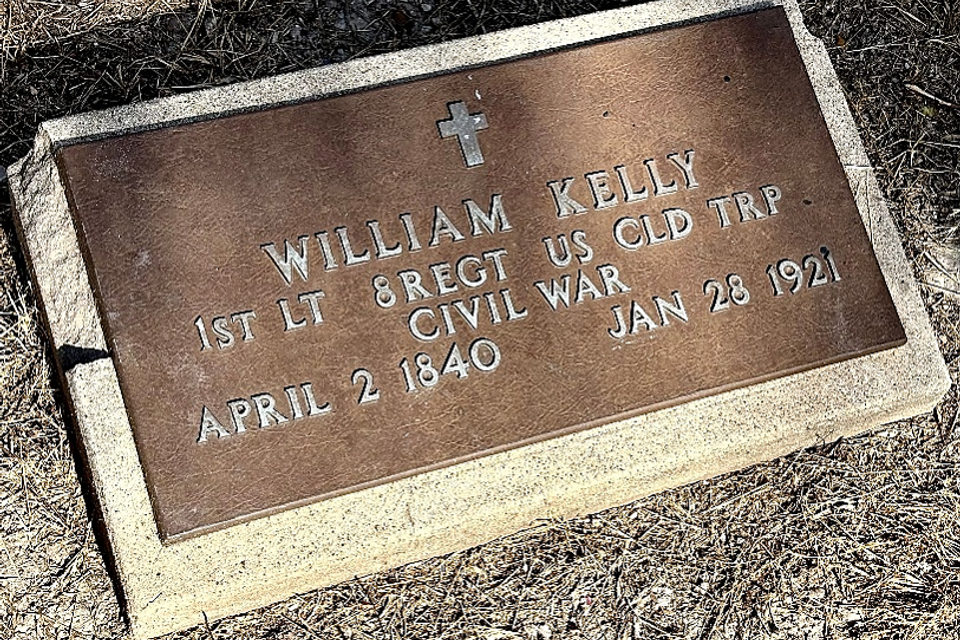
Several decades later, in May, 1964, William’s granddaughter, Mrs. E. J. McGoohan, applied to the Department of Veterans Affairs for a new grave marker. Approximately two months later, a flat marker with a bronze plate was shipped from a foundry in Florida and placed at his grave. It is inscribed with a Latin cross and:

 
“My father owned six thousand acres of land on the river below Brownsville and he invested heavily in mines owned by people of the [Porfirio] Diaz regime. When Don Porfirio was overthrown and exiled, these holdings were confiscated.
 
“For years he carried as a talisman one of the sixty-dollar gold pieces that Emperor Maximillian presented to the five soldiers of the firing squad that executed him [in 1867].
Gravemarker   william kelly
“In 1872, he bought Dr. Augustus Watson’s home from his widow. The house had four rooms, a wine cellar, and a porch built of lumber salvaged from the wreckage of Clarksville. Through the years it grew to thirteen rooms and two baths. It had porches around three sides, six open fire places, five cisterns and its own gas machine. He got ice in hogsheads from Galveston, via steamer to Point Isabel and thence by Rio Grande Railroad here. He had a very fine library that he used continually and loved. One of the outstanding memories of our home were the Christmas trees and dinners for the poor in our back yard.“With G. M. Raphael, a native born Russian, and others, my father organized the First National Bank of Brownsville in the early nineties [1891] and was vice-president. When Mr. Raphael died a few years later, he succeeded as president in which capacity he served until he retired in 1907.
 
“Father was a director of the Rio Grande Railroad, one of the organizers of The Philharmonic Society, that built the opera house in the seventies, and of the Literary Club. He organized the Grand Army of the Republic Chapter and was a member of The Loyal Legion. For more than twenty years he was president of the board of City Schools during which time the two story brick school house was built near Washington Park.”....(daughter Mary Geraldine Kelly).

R.I.P. COMRADE KELLY!