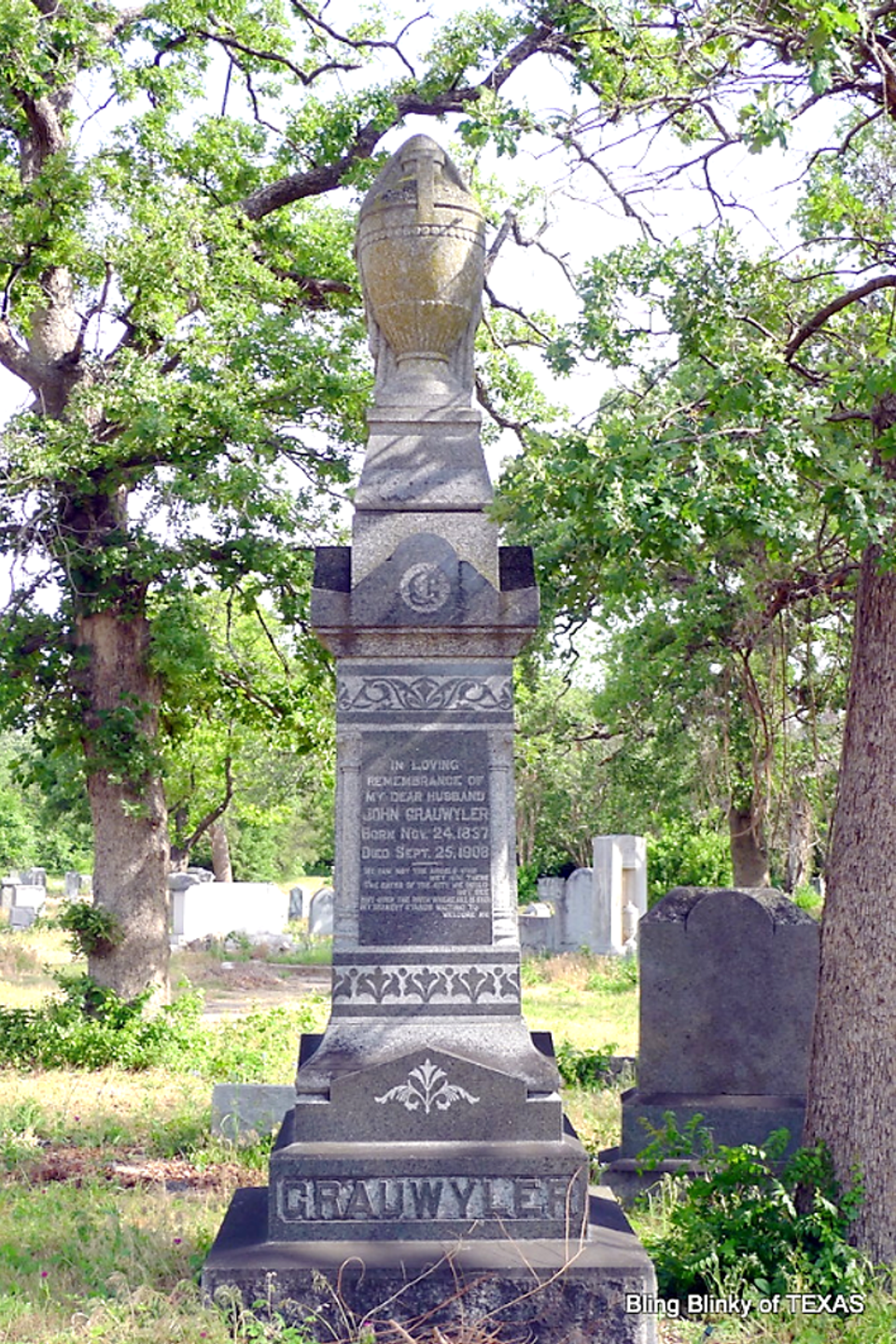
During the rest of their two-year term, John and Frederick participated in the battles of Bull Run (July 21, 1861), Seven Days Battles (June 1862), Cedar Mountain (August 1862), Antietam (September 1862), and Chancellorsville (April 1863). Even though there is no mention of wartime wounds or injury in John’s pension file, his time in the service was not all rosy. He was reported “Absent without leave since April 21, 1862” on the unit’s March/April Muster Roll. A regimental court martial fined him $10 for his absence. However, he was reported ‘present’ on the next Muster Roll, which included a note, stating: "Was reported on last roll absent without leave, but in fact was unable to join the Reg’t. on account of sickness.... Was excused for being absent (by the Col.) on account of sickness."
John had contracted malaria while in Maryland and had been laid up for a while with fever. The disease lingered with him the rest of his life, eventually inhibiting his ability to do manual labor. But the $10 fine levied against him by the court martial was reversed! On June 2, 1863, when their two-year term of service expired, John, Frederick, and their entire regiment mustered-out at Lockport, New York. What John did immediately afterward remains a bit of a mystery.
In a brief biographical sketch published in the Memorial and Biographical History of Dallas County, Texas, John is also credited with participating in the battles of Gettysburg (July 1863) and The Wilderness (May 1864). However, since John had mustered-out with his regiment well before those two battles occurred, his war service record seems to have been embellished a bit. This same sketch also states: "Mr. Grauwyler received a gunshot wound at Antietam and was confined in the hospital at Frederick, Maryland." But, as stated above, there is no mention of a wound or injury of any kind found in his pension records. More embellishment? His hospital confinement might have been associated with his less dramatic bout of malaria. More about the odd spelling of his surname in a minute.
Not only does the previously mentioned biographical sketch indicate military service after his June 1863 discharge, a notation in his pension file implies that he was arrested and confined by the Provost Guard on January 21, 1864. Where, or even why John was detained is not stated. But he was quickly rescued by a Captain and a Lieutenant: "Capt. Berry, Will [you] please release from confinement John Grovellin [sic] Co. E, 28th New York arrested yesterday. He is not in the service.... By order of H. B. Todd, Capt. & Pro. Mar. [and] Chas. W. Thompson, Lieut. & Adj’t."
The 1892 sketch also mentions that John “took part in the review at Washington, District of Columbia”..., which is apparently another embellishment, since the Grand Review occurred in late May 1865 – long after his discharge from the army. Although John’s exact whereabouts and activities are mostly unaccounted for (accurately) between his discharge from the Army in June 1863 through the Spring of 1865, he does finally show up on the June 1865 New York State Census. He was living in Hopewell, New York with his wife, Jane, and their 4-year-old daughter Rose. The census enumerator noted that John was a ‘naturalized’ citizen born in Ireland (instead of Switzerland) and strangely, still in the Army – with no other occupation listed. At any rate, John’s two-year stint in the army was not kind to his current or future health. His wartime bout with malaria had weakened his body.
By June 1870, John and Jane owned a 10-acre farm in Hopewell. It was a small farm by most measures, but they were getting established. They owned one milk cow, and his acreage produced 60 bushels of wheat during the previous 12 months. His yearly farm products generated a meager income of only $115 [about $3,000 in 2026 dollars]. Luxuries must have been far and few between!
Fast forward another five years, to June 1875: John, Jane, and Rose (now a teenager at age 14) were still living in Hopewell, probably on the same farm. John was listed as a mason - instead of a farmer. At least the 1875 census enumerator correctly listed John’s birthplace as Switzerland!
By June 1880, daughter Rose had moved out of her parents’ home. Later records indicate she had married a Mr. Clark (and possibly others over the ensuing years). John was again listed as a stone and brick mason, but they still owned the 10-acre farm. Health issues, likely resulting from his battle with malaria, were probably taking a toll on his ability to do manual farm labor. He had grown prematurely feeble and as a result, their income suffered. Seven of his ten acres were simply mown grassland which produced six tons of hay. Twenty-five apple trees on the other three acres produced 50 bushels of fruit, providing $50 of income. John owned one horse and six chickens, which laid twenty dozen eggs. Altogether, his farm generated income of about $100 in 1879. Meanwhile, an elderly couple named Thomas lived nearby in Hopewell. They had an unmarried 27-year-old daughter, Emma, still living at home. It is highly likely that Emma was well acquainted with the Graviller family. More about her soon.
With declining health and little hope for an improved financial situation, a bit of stress must have entered the Graviller household. That stress apparently reached a boiling point in 1882 when tensions between John and Jane devolved into a tussle. As a result, he was charged with assault and battery and convicted on those charges in a New York Sessions Court (a local criminal tribunal presided over by a county judge or justice of the peace to hear misdemeanor trials and non-capital offenses). On January 10, 1883, Judge William H. Smith sentenced John to serve four months at Monroe County Prison at Rochester, New York. He arrived there three days later. After completing his sentence, John’s life really took a sharp turn! While he had been languishing in prison, his small farm homestead burned to the ground under unexplained circumstances. But the Graviller’s somehow owned an insurance policy – and now a vacant lot.
"Upon being released from confinement, insurance money of about $500 was received, the lot upon which the house had stood was sold and with the proceeds [he] is said to have emigrated to Dallas." It is alleged that John did not leave Hopewell alone when he ventured down to Dallas – and his traveling companion was not his wife. Instead, it was reportedly the aforementioned Miss Emma Thomas. Wife Jane and daughter Rose were left behind. After arriving in Texas, John quickly discarded his surname Graviller, and adopted the new surname, Grauwyler. He was apparently intent on beginning a new life and identity in his new environs.
About a year after arriving in Dallas, John filed for a divorce from Jane. A notice of the pending suit had reportedly been “given to said defendant [Jane Graviller] by publication according to law.” A defense attorney was appointed by the Dallas court to represent Jane at the divorce proceedings, even though she was in distant New York and possibly unaware of what was going on in Texas. The only witness to the divorce was John’s good friend,....you guessed it ... Emma H. Thomas! "When he came to Texas, a woman by name of Emma H. Thomas came here to Texas with him. They lived together here in Dallas County, Texas for about a year or so, until father applied for a divorce from mother here in Dallas Co. and used his woman Emma H. Thomas as his witness... (daughter Rose Clark, June 10, 1911).
Whether or not Jane was actually aware of her divorce case in Texas is uncertain. At any rate, a divorce decree was granted to John on June 13, 1884. He was now an unattached man – but not for long! About six months later, on January 8, 1885, John Grauwyler was about 52 years old when he and Miss Emma H. Thomas obtained a marriage license in Tarrant County, Texas. They were married the same day by Minister of the Gospel, Robert D. Wear. They would have no children together.
John apparently had a feisty attitude at times – or at least a knack for getting into difficult situations. Later that year, on Sunday, October 4, 1885, a severely grammatically-challenged news item mentioning John was published in The Dallas Daily Herald. It noted that in the City Court at Dallas, Justice Schuhl presided over...."A complaint of a similar character was also filed same against William Patterson upon a complaint made by J. J. Grauwyler. Also a complaint by the Grauwyler against Patterson, charging the latter with threatening the life of the former."
In June 1890, John was enumerated on the Special Veterans Schedule of the federal census. He was still living in Dallas and used his old surname, Graviller. He confirmed that he was a Private with Co. E, 28th New York Infantry, having enlisted May 21, 1861 and discharged June 4, 1863 – after serving 1 year, 8 months, and 13 days (note that these dates do not line up correctly with the time served).
A couple months later, on August 26, being in poor health, John filed for a military pension – once again using his old surname, Graviller. In fact, he had been feeling poorly since arriving in Texas. In a later Pension Declaration, dated April 6, 1891, John stated he was 57 years old, stood 5 feet, 9 inches tall, had dark hair, gray eyes, a fair complexion, and was living at 838 Main St. in Dallas, Texas. In a stretch of the truth, he declared that since leaving the service on June 2, 1863, he had “resided in the County of Dallas in the State of Texas” (ignoring his many post-war years living with Jane in Hopewell, New York), his occupation had been of a farmer, and he was “in part” disabled from obtaining his subsistence by manual labor. His officially claimed debility was “malarial fever caused by exposure”, which over time, “resulted in malarial poisoning and general debility of whole system.” To support this claim, John included affidavits from his physician and acquaintances. The following excerpt was contributed by a friend, who declared:
... we have been acquainted with the claimant, John Graviller for about seven years...during the time, he has been a sufferer from general disability; most of the time when I would meet him, he would appear in feeble health – from his general appearance, as we are able to judge, not being medical experts; he is, and has been in poor health from the time we first made his acquaintance and we farther believe from our knowledge of the man, that his is a person of correct habits, and that his disabilities are not due to vicious habits, and we farther state he has not been able to do a days work for the past five years... Adolph Leutwyler, Feb 13, 1891.
Doctor Hugh L. McLaurin of Dallas concurred by swearing: "I am the family physician of John Graviller; that I have served him in that capacity for two and half years; he is suffering from nervous prostration and general debility; his physical condition is such that he is unable to do manual labor.... H. L. McLaurin, Feb 13, 1891." In order to secure his pension, John was required to submit additional evidence of his debility. Months later, in June 1892, Doctor McLaurin further elaborated on John’s condition by swearing...."I have known John Graviller for a period of two and a half years. My acquaintanceship dates from the time that I was called to render him professional services. I found him suffering from a severe attack of malarial fever. This fever continued several weeks. During the fever he suffered greatly from indigestion and often convalescence dyspepsia developed and continues to this time. He now suffers from general debility; has lost no less than 30 lbs. in weight, has also become much weaker. He also suffers from rheumatism in his arms and while it is painful, I do not consider it the most prominent symptom. My professional services have been given him from time to time, since I was first called to see him 2½ years ago. I consider his condition such that he is totally disabled from doing manual labor.... Hugh L. McLaurin, June 15, 1892."
Despite his weakened physical condition, the aforementioned 1892 Memorial and Biographical History of Dallas County, Texas notes that John “has a fine farm of 365 acres, all of which is under a fine state of cultivation.” Exaggeration? Probably. It goes on to say: “Politically, Mr. Grauwyler affiliates with the Democratic party, and has held the office of Road Overseer for five years. Socially, he is a member of the G. A. R. Post of Rochester.” (Note: His G.A.R. membership in New York is very unlikely).
Looking back, John’s daughter Rose was likely well aware that her father had left New York with Emma Thomas. She reportedly made several attempts to locate and reconnect with him, without luck. He apparently preferred to not be found. On April 13, 1912, the Finger Lakes Times of Geneva, New York reported: "Some fifteen years ago, Rose Gravalier, who was playing with an opera company, struck Dallas, and at that time having learned that her father was living at Dallas, Rose got the officials to assist her in a hunt for him, but they were unable to locate him, probably on account of the change in his name."
John, in fact, did become a member of the Grand Army of the Republic (G.A.R.) - but in Texas. Sometime before April 1900, he became affiliated with Maj. Gen. John A. Dix Post #11 at Dallas – as John Grauwyler. Although little is known about his involvement with the Order, records show he was appointed as an Aide-de-Camp for the Dix Post, and was elected as an Alternate Delegate to represent the Post at the April 1901 annual encampment of the Department of Texas, G.A.R. in Galveston - but he did not attend. His poor physical condition and the nearly 300-mile distance from Dallas to Galveston were probably factors for his absence.
The enumerator for the 1900 federal census visited the Grauwyler farm in Dallas on June 15th. Several of the details he recorded on the census sheet seem to be accuracy-challenged – for whatever reason. For example: John is listed at 62 years old and born in November 1837 in Switzerland (instead of age 66 and born in November 1833). It also states that he and Emma had been married 35 years (instead of 14 years). It is no wonder that details found on some good online search websites (ie. Find A Grave, Ancestry, etc.) and posted family histories can often be unreliable and misleading.
On September 24, 1892, John filled out a questionnaire sent to him by the Bureau of Pensions intended to confirm his identity. Some of the information he entered is different from what is noted in other sources. The most striking variation is with his birth year. He indicated he was born November 28, 1833 in Basel, Switzerland, instead of in 1837 as noted often elsewhere. Another questionable entry he made is that he had enlisted in April 1861 at Canandaigua, Ontario County, New York, instead of in May 1861.
John also stated that: he had lived in Chapinville, Ontario New York employed as a mason before he enlisted; was discharged in June 1863 at Lockport, New York; from 1865 to 1883, he lived in Chapinville; and from 1883 to 1902, he lived in Dallas, Texas, engaged as a farmer. He described himself as being 5 feet, 8 inches tall, with blue eyes (instead of grey), brown hair, and a dark complexion. He also noted that he had a “scar on abdomen caused by stone in the bladder.”... John Graviller, Sep 24, 1902.