Skip to content
.

Noah Field Alexander

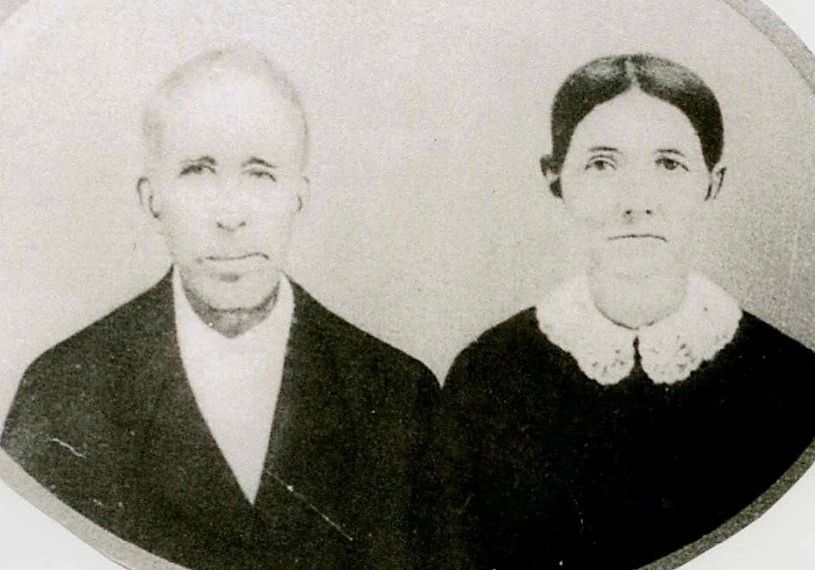
Absalom and ellen may alexander
Early Life in Tennessee

Noah Field Alexander was born May 26, 1847, in Cornersville, Marshall County, Tennessee, a son of Absalom Alexander and Ellen May Fields. His father was born in North Carolina around 1800, and later established a farming household in south central Tennessee, where Noah spent his early childhood. His mother was born in Alabama in 1824.

The October 1850 federal census of Marshall County provides the first detailed glimpse of the Alexander family. The father, Absalom, was a 50-year-old farmer who owned real estate valued at $1,600. His household included his much younger wife, Ellen, age 25, and their two toddlers, Noah, age 3, and Mary F., age 2. Also living in the household were three other unidentified members of the extended Alexander family: Agnes Alexander, age 52; Mary J. Alexander, age 22; and John E. Alexander, age 22.

 
Right: Absalom and Ella May (Fields) Alexander

During the next decade, the Alexanders migrated southwestward, leaving Marshall County for a new home in neighboring Lawrence County, Tennessee. The 1860 census for Lawrence County, recorded in August, listed Absalom as a 60-year-old farmer, and Ellen as 37. Thirteen-year-old Noah now had four younger siblings: Mary F. (age 11), Benedict (age 8), McCallender (age 5), and Joshua B. Alexander (age 2).
 
The family's economic circumstances were reflected in the value of Absalom's property, which had increased substantially since 1850 – from $1,600 to $4,000. Farming provided the foundation of their household life, allowing Noah to grow up in an environment where land, family responsibilities, and agricultural labor were central features of everyday living.

In addition, Noah's childhood coincided with a turbulent period in America. Political tensions intensified during the years leading up to the Civil War, which began in April 1861. When fighting commenced, Noah was not yet 14 years old. However, his life would take a dramatic turn as he entered military service the following year.


Civil War Service

During the summer of 1862, Noah was still a teenager when he enlisted with the federal Army at Shelbyville, Tennessee. He volunteered to fight for the Union even though his parents were both natives of  Confederate states. Although the birthplace of his parents alone cannot establish the family's political convictions, Noah's decision to fight for the Union suggests that the Alexander family may have held Unionist sympathies despite its Southern roots. His federal enlistment is particularly noteworthy given the divided loyalties that characterized southern Tennessee and the surrounding region during the war.
Since Noah was born in May 1847, he was only 15 years old when he put on his blue uniform. An online military profile notes his enlistment age as 18, so it is possible he stretched his true age a bit when he signed up to serve. On July 7, 1862, he mustered-in at Nashville, Tennessee as a Private in Company E, 10th Tennessee Infantry. This newly organized regiment was assigned to perform garrison, railroad-guard, and other military duties in Tennessee and the surrounding area.

The precise start of Noah’s military service is recorded differently in various sources. One military profile gives June 9, 1862, as his enlistment date, while a compiled-service-record identifies June 19, 1862. The military profile records his formal muster-in date as July 7, 1862, in Tennessee. These date variations may represent different stages in the enlistment and mustering process.

Noah continued to serve in Company E until the end of the war, mustering out of the army at Nashville. His service profile gives June 23, 1865, as his muster-out date. However, the 1890 Census Special Veterans Schedule, notes a later date for his discharge, July 3, 1865, and calculates his time in service as three years and 24 days. This reported service duration does not align neatly with the dates in other records, so it should be treated as the ‘Veteran’s Schedule's recorded figure’ rather than an independently confirmed calculation. The 10th Tennessee Infantry’s regimental history supports the earlier June 23, 1865 date as the plausible muster-out date. The difference between the regimental chronology and Noah's individual Veterans Schedule entry nevertheless deserves to remain visible in his biography.

By the time Noah left the army, he was 18 years old. He subsequently established himself in Texas, married in 1873, and built a life centered on farming and raising children. His early military service remained a significant part of his biography, later reflected in his association with the Grand Army of the Republic (G.A.R.) in Texas.


A Move to Texas, Marriage and Children

Noah married Mary Jane Davidson on April 3, 1873, in Brazos County, Texas. He was 26 years old and she was 25. She was born in Alabama and became Noah's lifelong companion. Their marriage marked the beginning of a large family that would eventually include six children.

In October 1873, not long after their marriage, Noah and Mary Jane welcomed their first child into the family when Benedict D. Alexander was born. Stella Maude Alexander followed about two years later, in August 1876. William Absalom Alexander came along in January 1878 and Zella Ward Alexander was born in March 1881. Edna West Alexander entered the family in August 1884, and Pearl B. Alexander followed two years later, in September 1886. By late 1886, with six children growing up on the farm, the Alexander household must have been a bustling and lively place.

The couple's first years together coincided with a period of growth and change throughout Texas. Farming remained an important occupation, and families continued to establish farms and communities across the state. Noah also pursued agriculture, an occupation that would remain central to his working life.

The June 1880 federal census places the couple in Precinct #3, in Lamar County - a far northeastern Texas county bordering Oklahoma. Noah was 33 and farming. Mary was also listed at age 33, and was keeping house. Their three young children at that time were: Ben, age 5; S. M., age 3; and W. A. Alexander, age 2. The census identifies all three children as born in Texas, reflecting the Lone Star state as the setting for the younger generation's early lives.

Even though Noah had resettled comfortably into civilian life, his connection to the Civil War remained important. On July 17, 1884, he submitted an application for a military pension based on his Union Army service. His application was eventually approved, and he received pension certificate number 1009813.

The 1890 Census Special Veterans Schedule provides another glimpse of his circumstances. His Post Office address was listed as Era, a small community in Cooke County, approximately 60 miles north of Fort Worth. The schedule confirmed his service as a Private in the 10th Tennessee Infantry. He apparently had no lingering service-related disabilities, as none were noted by the census enumerator.

In 1900, the Alexander family was still living in Cooke County, Texas. The federal census, taken in June that year, provides a particularly detailed picture of the household. Noah was 53 years old and again identified as a farmer. He owned his farm with a mortgage. Mary was also 53 and they had been married 27 years. All six of their children were still living – and all were still living with their parents - even though four of them had reached adulthood. None were married. Benedict Alexander was 25 and had attended school nine months during the preceding year. Stella Alexander was 23, William Alexander was 22, and Zella Alexander was 19. The two younger Alexander girls,  Edna, age 15, and Pearl, age 13, had attended school for five months during the year.

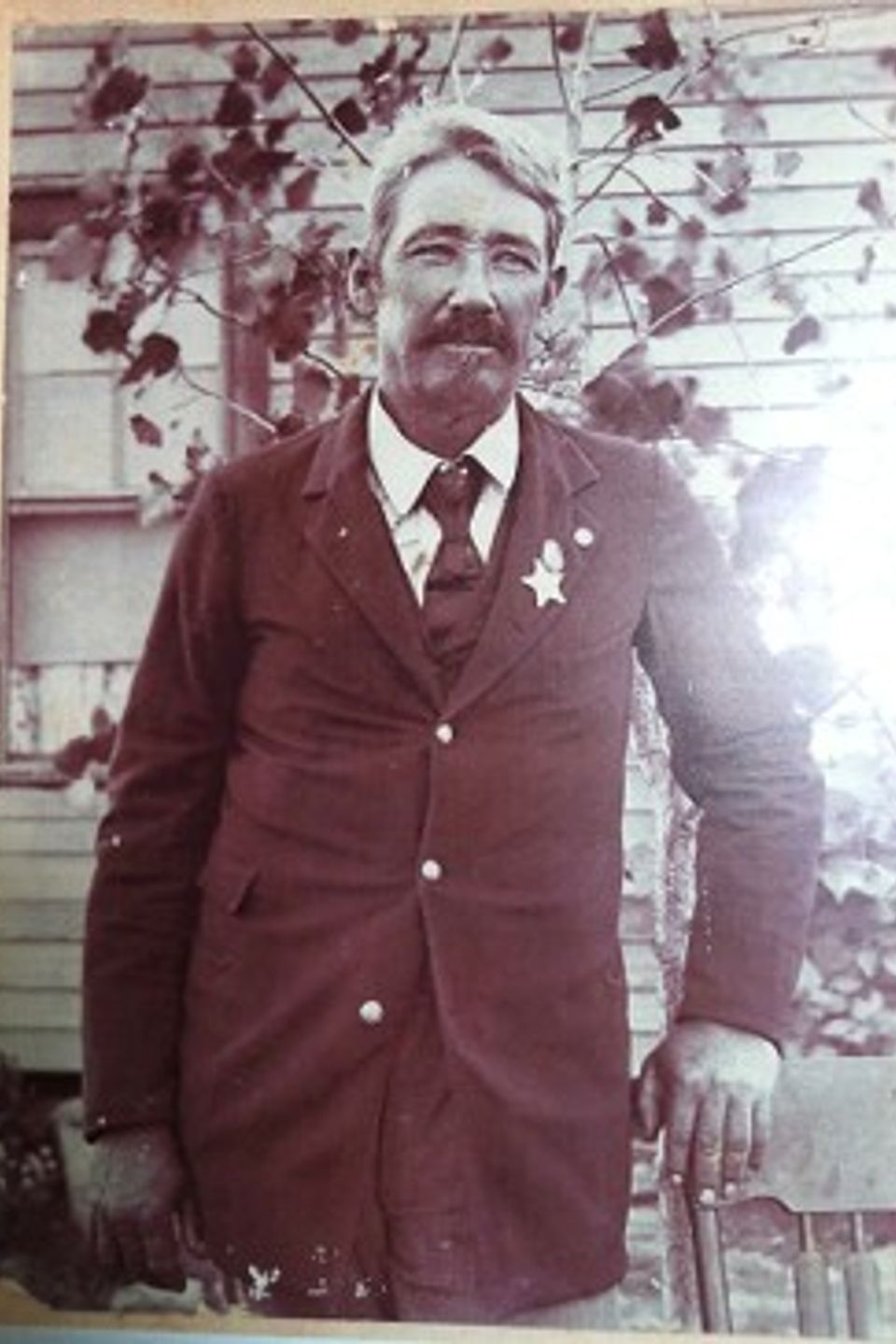
Noah field alexander
Noah’s second son, William, was working as a farm laborer, contributing to the agricultural work associated with the family property. Everyone in the large household was noted as being literate. The details thus noted reflect the family's continuing connection to farming while the younger generation pursued education and prepared for adult responsibilities. The farm continued to support Noah’s large family. Their six children had grown from small children into young adults, and the family had established a prosperous homestead in Cooke County – a home where Noah would remain for the rest of his life.

The Grand Army of the Republic in Texas

Noah's life in Texas also included an association with the Grand Army of the Republic (G.A.R.), the national organization of Union veterans established after the Civil War. The Department of Texas, G.A.R., was organized in 1885. The following year, on April 27, 1886, Maj. General Samuel R. Curtis Post #12 was installed at Gainesville, Texas – about 14 miles northeast of Era. This local Post provided Noah and other Union veterans living in Cooke County an opportunity to share wartime reminisces, participate in veteran activities, and sustain the memory of those who had served.

Noah’s name appears in the official proceedings of the 8th Annual Encampment of the Department of Texas held in Denison in March 1893. He is listed as a Delegate, elected by his peers to represent Curtis Post #12 at the annual event. But for some reason, he was unable to attend. His inclusion on the Delegate list provides evidence of his connection with the Curtis Post and the wider Union veteran community in Texas.


Left: Noah Field Alexander

Curtis Post #12 was a relatively short-lived G.A.R. Post, disbanding about 1895. The history of this local Post and its members, such as Noah Alexander, are part of the broader story of the G.A.R. in Texas. Noah's name likely appeared again years later in Texas G.A.R. records. The Proceedings of the 38th Annual Encampment of the Department of Texas, held in Houston in May 1923, includes an attendee named ‘N. F. Clerander’, who was serving as Officer-of-the-Guard for Parmley Post #4 of Fort Worth. The unusual surname may represent a transcription or printing error for ‘Alexander’. If that identification proves correct, it would suggest that Noah was associated with the G.A.R. in his later years - long after Curtis Post had disbanded.

Later Years


The 1910 federal census offers another snapshot view of Noah's later life in Cooke County. On April 16, he was recorded as being 62 years old and working as a general farmer. He owned his farm free and clear. Compared with the 1900 census entry, this was a significant change in the status of his property. The earlier mortgage was no longer noted, suggesting that Noah had paid off the obligation and achieved greater financial independence.

Mary Jane, listed at age 63, remained at his side. The couple had now been married for 37 years, and all six of their children were still living, with five of them continuing to live in the family homestead. Stella, now 33 years old and unmarried, worked as a Postmistress. William, 32, was still employed as a laborer on the home farm. Zella, 29, worked as a milliner on her own account. Edna was 25 and Pearl was 22.
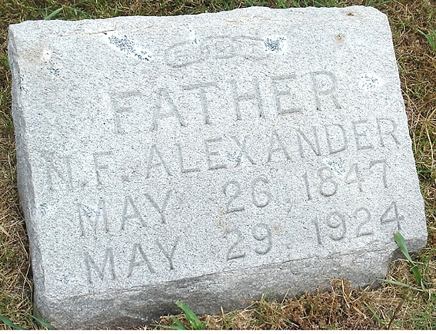
Headstone   noah field alexander
The different occupations of the children illustrate how they were finding their own places in the community. While William continued the family's agricultural tradition, Stella's position at the post office and Zella's millinery business represented other opportunities available to women of the era. The 1910 census also specifically identifies Noah as a survivor of the Union Army, commemorating an important episode from his earlier life.

He was now an elderly and respected gentleman who had spent decades working in agriculture and raising his family. His life had moved from rural Tennessee to Texas, from military service to farming, and from the responsibilities of young parenthood, to the experience of watching his children build their own lives.


Death and Burial

Noah died in Gainesville, Cooke County, Texas, on May 29, 1924, from a condition recorded as "cardio nephritis" - just three days after his 77th birthday. He was laid to rest in Era Cemetery in Era, Cooke County. His headstone, located in Section 5, Row 5, Aisle 13, Plot A, bears the simple inscription:
FATHER
N. F. ALEXANDER
MAY 26, 1847
MAY 29, 1924
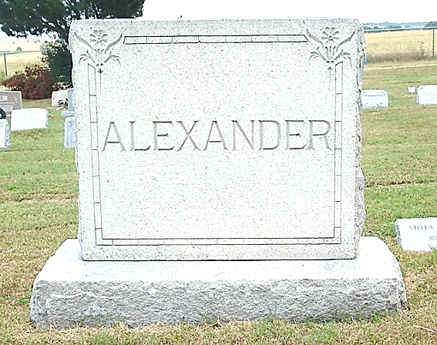
Alexander grave monument
The three interlocking chain links above the inscription suggests Noah held membership in the Independent Order of Odd Fellows (I.O.O.F.), a historic fraternal, and benevolent organization. The letters F, L, and T etched within the links represent the core principles of that Order: Friendship, Love, and Truth.

A substantial monument also adorns the family plot. Noah's designation as “Father” on his headstone captures the central place he occupied in the family. Mary Jane survived him, but only for a short time. She passed away in 1926 at age 78. Their six children - Benedict, Stella, William, Zella, Edna, and Pearl – carried the Alexander family name and legacy into another generation.

Noah's life spanned a remarkable period of American history. Born in Tennessee before the Civil War, he served in a Federal infantry regiment as a teenager and later established himself as a farmer and family man in Texas. He lived through the war's conclusion, the growth of an influential veterans' organization, and the continuing development of rural communities across the Lone Star state.

Through military records, census schedules, pension file documents, and G.A.R. proceedings journals, the principal chapters of Noah Field Alexander's life can be traced. He was a young soldier, a hardworking farmer, a husband, a father, and a Union veteran who made Texas his permanent home. His headstone's simple designation, "Father," perhaps says more about the life he built than any lengthy inscription could.
REST IN PEACE, COMRADE ALEXANDER!

Visit Our Social Media...and Feel Free to Share With Others!